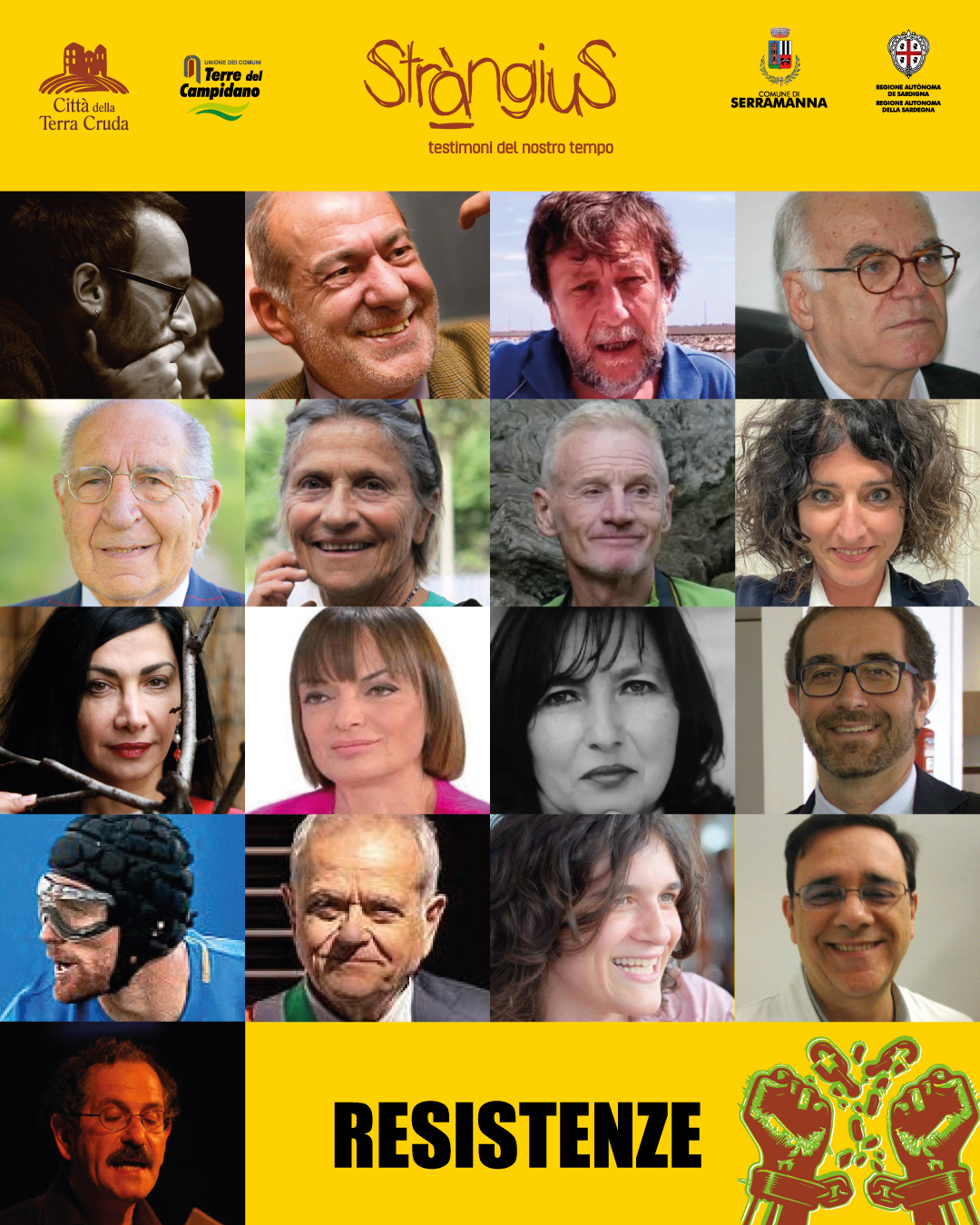
Il Festival

Maram al-Masri
Born in 1962 in Latakia (Syria), on the Mediterranean coast just twenty nautical miles from the island of Cyprus, Maram al-Masri has lived in Paris since 1982.
After her first book, I Threaten You with a White Dove, published in Damascus in 1984 by the publishing house of the Ministry of Education, she returned to poetry with Red Cherry on White Tiles, published in Tunis in 1997 by Éditions L’Or du Temps and enthusiastically received by critics across the Arab world.
In March 1998 she was awarded the prize of the Lebanese Cultural Forum in France, in the presence of the Lebanese poet Adonis, an award dedicated to Arabic literary creation. Her third book, I Watch You, originally published in Beirut in 2000 (and later in France and Spain), was published in August 2009 by Multimedia Edizioni in an Italian translation by Marianna Salvioli.
Her book Les âmes aux pieds nus, published in France by Le Temps des Cerises, appeared in Italy as Anime scalze in 2011 (Multimedia Edizioni / Casa della poesia). In 2014, the same publishers released Arriva nuda la libertà, translated from Arabic by Bianca Carlino. In 2018, with a translation by Raffaella Marzano, La donna con la valigia rossa was published, an illustrated story by the Salerno-based artist Ida Mainenti.
Maram al-Masri has taken part in numerous international poetry festivals worldwide. For Casa della poesia, she participated in Il cammino delle comete and Sidaja (2004), Napolipoesia nel Parco and the Sarajevo Meetings (2005), and VersoSud in Reggio Calabria (2007 and 2009). In 2019 she was among the guests of Le molte lingue della poesia in Desenzano del Garda.
She received the Casa della poesia – Regina Coppola Prize in 2017 and the “Annibale Ruccello” Prize in Castellammare di Stabia in 2019.
Alberto Bocchetta
Born in Cagliari on November 13, 1953, Alberto Bocchetta earned a degree in Medicine and Surgery in 1979 and later specialized in Psychiatry and Pharmacology. He was a Medical Researcher at the University of Cagliari and taught Psychopharmacology at the Faculty of Medicine until 2020.
Since 2022 he has been President of ANPPIA Sardegna (National Association of Italian Anti-Fascist Political Persecutees). In 2023 he edited The Sardinians of Transport 81: [Bolzano – Flossenbürg, September 5–7, 1944].
Mario Capanna
Politician, writer and activist, Mario Capanna was a student leader during the 1968 movement and National Secretary of Democrazia Proletaria until 1987. An environmentalist and pacifist, he is also a farmer and beekeeper.
He has served as Regional Councillor in Lombardy, City Councillor in Milan, Member of the European Parliament and Member of the Italian Parliament for two terms (1983–1992).
Among his many books are Formidabili quegli anni (1988), Il fiume della prepotenza (1996), Lettera a mio figlio sul Sessantotto (1998), L’Italia viva (2000), Verrò da te (2003), Coscienza globale (2006), Il Sessantotto al futuro (2008), Per ragionare (2010), Noi tutti (2018) and EVO (2022). In 2024, together with Luciano Neri, he published Palestine–Israel. The Long Deception, the Indispensable Solution.
Luca Casarini
An activist and former leader of the movement critical of neoliberal globalization, Luca Casarini founded Mediterranea Saving Humans in 2018 and served as head of mission in several monitoring and rescue operations in the Mediterranean aboard the ship Mare Jonio.
Since 2023 he has taken part in the Synod of Bishops as a “special guest” of Pope Francis and collaborates with the Mediterranean Theological Network.
He is the author of the novel La parte della fortuna (Mondadori, 2008) and Genova dentro (Editori Internazionali Riuniti, 2011), about the protests against the G8 summit in July 2001. Together with Gianfranco Bettin he wrote La cospirazione del bene (Feltrinelli, 2024).
Michel Cassir
Born in Alexandria, Egypt, in 1952, Michel Cassir spent his youth in Lebanon, where he took part in movements promoting the renewal of poetry. After a long stay in Mexico, which helped shape his poetic universe, he settled in Paris, where he continues his intense creative and poetic activity alongside his scientific work.
Founder and co-director of the poetry series Levée d’Ancre for Éditions L’Harmattan, he has published thirteen poetry collections, including Le sang qui monte lucide, Une étoile avala moi, Ralenti de l’éclair and Il n’est d’ange que de parfum. Braise de galop is his only prose work. His most recent book is dieux des dieux des dieux (2008).
In 2007 he received the Grand Prix de la Poésie Francophone “Les Jasmines d’Argent” for his entire body of work. His poetry has been translated into Spanish, Arabic and Turkish, and he has translated Latin American poets. He has performed and participated in festivals in France, Mexico, Lebanon, Argentina, Nicaragua and Turkey.
Cassir’s poetry is a poetry of travel and encounter, rich with the scents of spices and sea salt, bringing together people and cultures, languages and sounds.
Francesco Casula
Born in Ollolai, Francesco Casula graduated in History and Philosophy in Rome in 1970. He taught in secondary schools for about forty years and is a freelance journalist and scholar of Sardinian history, language and culture.
Elected by the Regional Council of Sardinia in January 2000, he served for five years as a member of the Regional Observatory for the Sardinian Language and Culture.
Among his most important publications are Statuto sardo e dintorni, Storia dell’Autonomia in Sardegna, Le contro-storie, La lingua sarda e l’insegnamento a scuola and Letteratura e civiltà della Sardegna. His latest work is Counter-History of Sardinia: From Nuragic Civilization to Spanish Rule.
Beniamino Deidda
Born in Sardinia, Beniamino Deidda completed his studies in Cagliari and began his career in the judiciary in Florence, where he has lived since 1964 in Bagno a Ripoli. He entered the judiciary in 1963 and carried out most of his professional activity in Florence, first as a Pretore (magistrate) and later as a Judge for Preliminary Investigations.
He subsequently served as Deputy Public Prosecutor at the Florence District Court (1993–1998), Public Prosecutor of Prato (1998–2005), Prosecutor General at the Court of Appeal of Trieste (2006–2009) and Prosecutor General at the Court of Appeal of Florence (2009–2013). From 2012 to 2016 he was a member of the Governing Committee of the Higher School of the Judiciary.
His work has focused mainly on criminal law, particularly labour criminal law, where he developed recognized expertise in workplace health and safety. He presided over Italy’s first trial concerning fatal asbestos exposure among workers. He has dealt with several high-profile national cases, including the Unabomber crimes, the Eluana Englaro case, the Viareggio railway disaster and the Costa Concordia shipwreck.
He is the author of numerous publications and articles on workplace safety and labour law. Among his most significant works are Reati contro la salute e la dignità del lavoratore (Giappichelli, 2012) and PER NON ESSERE SUDDITI – Ten Simple Lessons on the Principles of the Constitution (Edizioni Piagge, 2023), widely used in Italian schools.
Both before and after retirement, he has dedicated himself to education and to promoting knowledge of the Italian Constitution in schools. He has also written extensively on the history of Florentine Catholicism, with works on Don Milani and Don Borghi. In 2024, together with Tommaso Montanari, he edited Disobbedienza profetica (Edizioni Abele).
Monica Giorgi
Born Monica Cerutti-Giorgi in Livorno on January 3, 1946, Monica Giorgi is a former Italian tennis player and essayist. As a singles player, she reached the third round of the French Open in 1967 and 1969 and the second round at Wimbledon in 1966. In doubles, she reached the second round at Roland Garros in 1966 and the third round at Wimbledon in 1973; in mixed doubles, she reached the third round at Wimbledon in 1971.
At the 1967 Tokyo Universiade she won two silver medals and was six times Italian doubles champion. In 1972, as a protest against Apartheid, she took to the court in Johannesburg wearing a provocative T-shirt depicting white and black feet intertwined, leading to her suspension following a complaint by the South African federation.
In 1980, at the end of her sports career, she was arrested in connection with a politically motivated kidnapping, accused of having played a supporting role. After retiring from tennis, she graduated in philosophy and taught history and philosophy in high schools.
A feminist, atheist and anarchist, she founded the association Niente più sbarre, focusing on prison conditions. She authored an essay on Simone Weil, La clown di Dio (2013). Her life story is told in Domani si va al mare, written by journalist Serena Marchi and published by Fandango, portraying a life lived uncompromisingly according to ethical and moral principles.
Giulio Guarini
Giulio Guarini is Full Professor of Political Economy at the University of Tuscia (Viterbo, Italy), where he coordinates the PhD program in Economics, Management and Quantitative Methods. He teaches Development Economics at Sapienza University of Rome and at ZUEL University in Wuhan (China) and is a visiting professor at the University of Bethlehem (Palestine).
He holds a PhD in Economics and a degree in Economics from Sapienza University of Rome and has conducted research periods in the United Kingdom at the Universities of Oxford and Sussex. He has worked as an economist and public official at the Italian Agency for Territorial Cohesion, the Ministry of Economic Development and the Ministry of Economy and Finance.
He teaches in several postgraduate programs, including the MESCI Master in Development Economics and International Cooperation and the Master in Cooperative Enterprise at Roma Tre University. He is a member of numerous research networks and editorial boards, including PSL Quarterly Review and Moneta e Credito.
His research interests include economic development, ecological transition, human development, innovation, ecological macroeconomics and inequalities. He has published extensively in major national and international academic journals.
Felicia Vitale Impastato
Born in Cinisi, Felicia Vitale married Giovanni Impastato, brother of Peppino Impastato, on September 30, 1978. In 1980 she was among the founders of the Impastato Center in Palermo and in 1986 contributed to the dossier Notissimi ignoti, concerning the murder of Giuseppe Impastato.
In 2004 she ran as a candidate for mayor of Cinisi. In 2010 she was among the founding members of Casa Memoria, of which she served as the first president. Her life and work are closely tied to the preservation of memory and the struggle for truth and justice.
Tommaso Juhasz
Born in Perugia, Tommaso Juhasz is 32 years old. After earning a degree in Political Science and International Relations, he became a skilled agricultural worker specializing in olive tree pruning and orchard care. This path allowed him to combine two perspectives on the climate crisis: the macro view of global processes and the concrete, lived experience of land, plants and agricultural labor.
In 2022 he joined Ultima Generazione and took part in several nonviolent actions in streets, museums and public spaces, including a protest during the women’s beach volleyball world championship final, which resulted in a first-degree conviction.
A scholar of philosophy, esotericism and spirituality, he converted to Christianity through the thought of Simone Weil.
Teresa Manes
Following the death of her son Andrea Spezzacatena, Teresa Manes has devoted her life to combating bullying and cyberbullying, visiting schools throughout Italy. In recognition of her tireless commitment, President of the Republic Sergio Mattarella awarded her the honor of Knight of the Order of Merit of the Italian Republic.
In 2024, Andrea’s story inspired the film Il ragazzo dai pantaloni rosa, which deeply moved thousands of viewers. Since Andrea’s suicide on November 20, 2012, at the age of fifteen, Teresa Manes has transformed her grief into a mission to raise awareness among young people and adults about the devastating impact of bullying and prejudice.
Serena Marchi
Serena Marchi is a journalist and author from Verona. For Fandango Libri she has published Madri, comunque (2015), Mio tuo suo loro (2017, revised edition 2024), Pink Tank (2019) and Randagio (2021), which won the “Gianni Mura” Literary Prize in 2022.
In 2025 she published Domani si va al mare, the biography of philosopher and former tennis player Monica Giorgi.
Vittorino Mason
Based in Castelfranco Veneto, Vittorino Mason has long promoted cultural initiatives. A writer and mountaineer, he coordinates the naturalist group Le Tracce. He writes for specialized mountain magazines and has published poetry, travel narratives and mountain guides.
He is co-author and editor of La natura dimenticata, a collective work dedicated to environmental protection. In 2014 he made his directorial debut with the documentary film La cengia de l’Adriano. Since 2020 he has developed a form of “visual poetry,” combining words, music and images in videos regularly published on YouTube.
Talk to the Forest. Dialogues and Meditations with Trees is his most recent book.
Ian McKinley
A promising Leinster player, Ian McKinley made his debut in the 2008–09 Celtic League and represented Ireland at the 2009 Under-20 World Championship. His career was abruptly interrupted in 2010 when a serious on-field accident caused partial loss of sight in his left eye.
Forced into early retirement but determined to continue playing rugby, he moved to Italy, where in 2013 he found a second chance thanks to specially designed protective goggles. In 2014 he returned to professional rugby with Udine, later playing for Viadana, the Zebre and Benetton Treviso.
After three consecutive seasons in the Italian league, he became eligible for the Italian national team and made his debut in November 2017 against Fiji, scoring his first points and symbolizing an extraordinary and inspiring comeback.
Renato Franco Natale
Born in Casal di Principe, where he still lives, Renato Franco Natale graduated in medicine in Naples and worked as a family doctor until his retirement in 2020. Politically active, he served multiple terms as a city councillor and was mayor of Casal di Principe from 2014 to 2024.
He has been involved in volunteer organizations focused on solidarity, civic engagement and the fight against organized crime. He is considered the first and only mayor of Casal di Principe to have placed transparency and the fight against the Camorra at the center of his administration, as noted by Roberto Saviano in Gomorra.
During the Spartacus trial, evidence emerged of a plan to assassinate him by staging a car accident, later abandoned. In May 2025 he published I, a Casalese Who Is Nothing Else. A Story of Resistance and Redemption, recounting the journey of a community from rural society to criminal domination and, after the murder of Don Peppe Diana, toward rebirth and liberation.
Laura Orlandini
Laura Orlandini collaborates with the Institute for the History of the Resistance and Contemporary Age of Ravenna and its province on educational and research projects and serves as a reference point for the Archivi del Novecento of Ravenna. She earned her PhD at Pompeu Fabra University in Barcelona with a dissertation on popular anticlericalism.
Her research focuses on twentieth-century social conflicts and the role of women in processes of civic construction, at both regional and national levels, with particular attention to the Resistance, cooperation and the history of education.
She collaborates with the Regional Network of UDI Archives of Emilia-Romagna and with RavennaTeatro and Teatro delle Albe on projects that bring historical research to the stage.